Raw data and analysis code released for three AI search studies
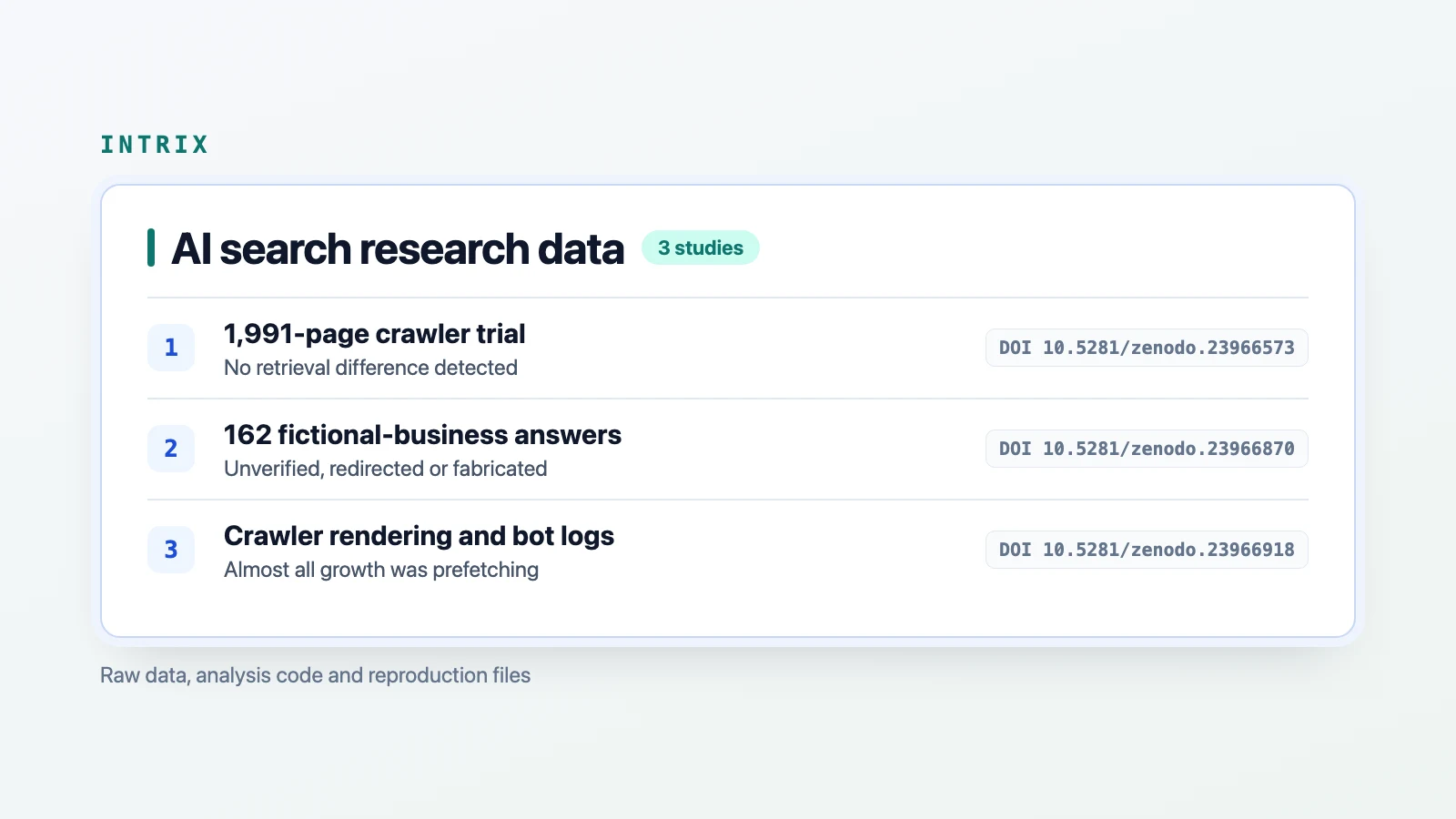
Intrix released the raw data and analysis code for three AI search studies on November 5. They examine answer structure and crawler retrievals, AI answers about nonexistent businesses, and inflated crawler logs. The files let others recalculate the results using the same data.
Does answer structure lead to more crawler retrievals?
Intrix randomly assigned 1,991 clinic pages on a dermatology information site to two groups. Only one group received an opening summary paragraph and question headings. Over eight weeks, from August 10 to October 5, 2026, the study counted how often four AI crawlers retrieved each page. The hypotheses, sample, analysis plan and stopping rules were published before the experiment began.
Retrievals were 3% to 4% higher in the group with answer structure, but the study did not detect a difference under the criteria set in advance. This does not establish that there was no effect. The sample cannot rule out an effect as large as 8%. The study measured crawler retrievals. It did not measure citations in AI answers.
The result differed from expectations and is being released as recorded. This fulfills the preregistration document’s promise to release raw data after the experiment. The randomized controlled experiment on 1,991 clinic pages includes anonymized page-level data, analysis code and the full text of each preregistration version. Recalculating from the public data produced the same values used for the original decision.
How does AI answer questions about nonexistent businesses?
On September 14, 2026, Intrix asked three AI services with web search enabled about nine fictional businesses in Busan, including clinics, law firms, tax accountants and tutoring schools. The study covers 162 answers about reputation, location, prices and opening hours.
The services responded differently. At one, 74% of answers said the business could not be verified. At another, 80% directed users to other real businesses in the same area. At the third, 15% presented addresses, opening hours and reviews for nonexistent businesses as facts. When AI cannot find your business, it may recommend a local competitor. A mention of your name also needs to be checked for supporting evidence.
The study of 162 AI answers about nonexistent businesses includes the original responses, the assessment of each answer and code to recalculate the tables.
Do higher bot counts mean more page retrievals?
Between August 24 and November 4, 2026, Intrix confirmed that the crawler building the ChatGPT search index opened and ran intrix.kr pages in a browser. On the Next.js site, rendering one page triggered prefetch requests for dozens of links shown on the page. Server bot logs recorded those requests as page visits.
Records for this crawler rose from 104 per week in late August to 2,539 in the last week of October. Almost all of the increase came from prefetch requests. Direct retrievals stayed roughly flat at 55 to 97 per week over the same period. These request types need to be separated when measuring how often an AI search crawler rereads pages. Counting them together inflates retrieval frequency and can lead to mistaken advice such as adding links to increase crawling.
The technical note on crawler page rendering and inflated bot logs includes 9,512 request records with IP addresses removed, aggregation code and browser reproduction code.
Where can you get the data?
The three studies were deposited separately in the public research repository Zenodo, each with its own identifier (DOI). Use the study links above or below to access the files.
Clinic page experiment · Nonexistent business answers · Crawler rendering and bot logs
Intrix uses measurement results as evidence for customer diagnoses, so it makes that evidence available for others to check. To discuss AI search diagnosis, contact Intrix.
Explore Intrix
More updates
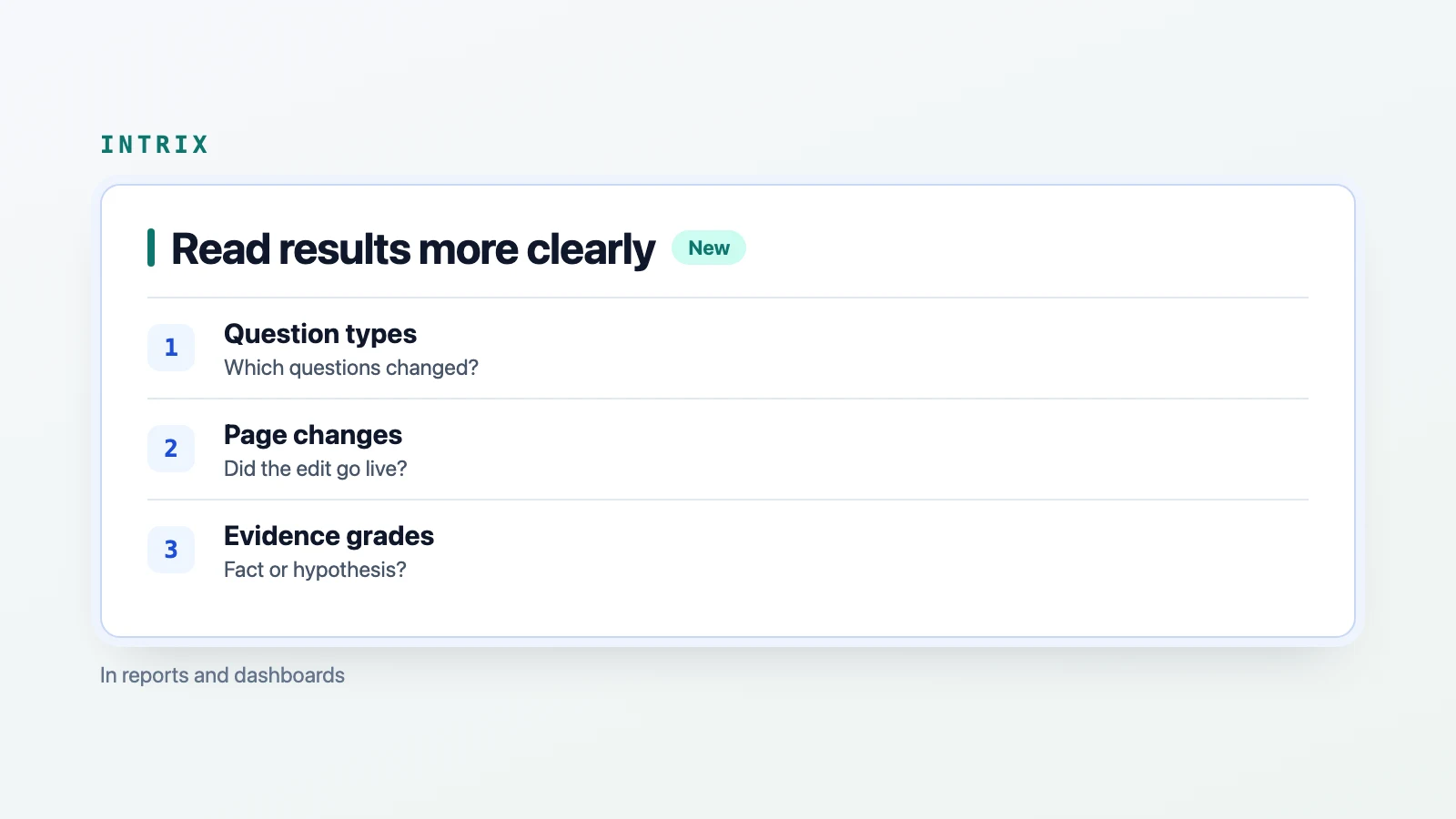
Read improvement results more precisely with question types, page changes and evidence grades
See which questions changed, whether edits reached the live page, and what supports each assessment. New details in Intrix reports and dashboards.
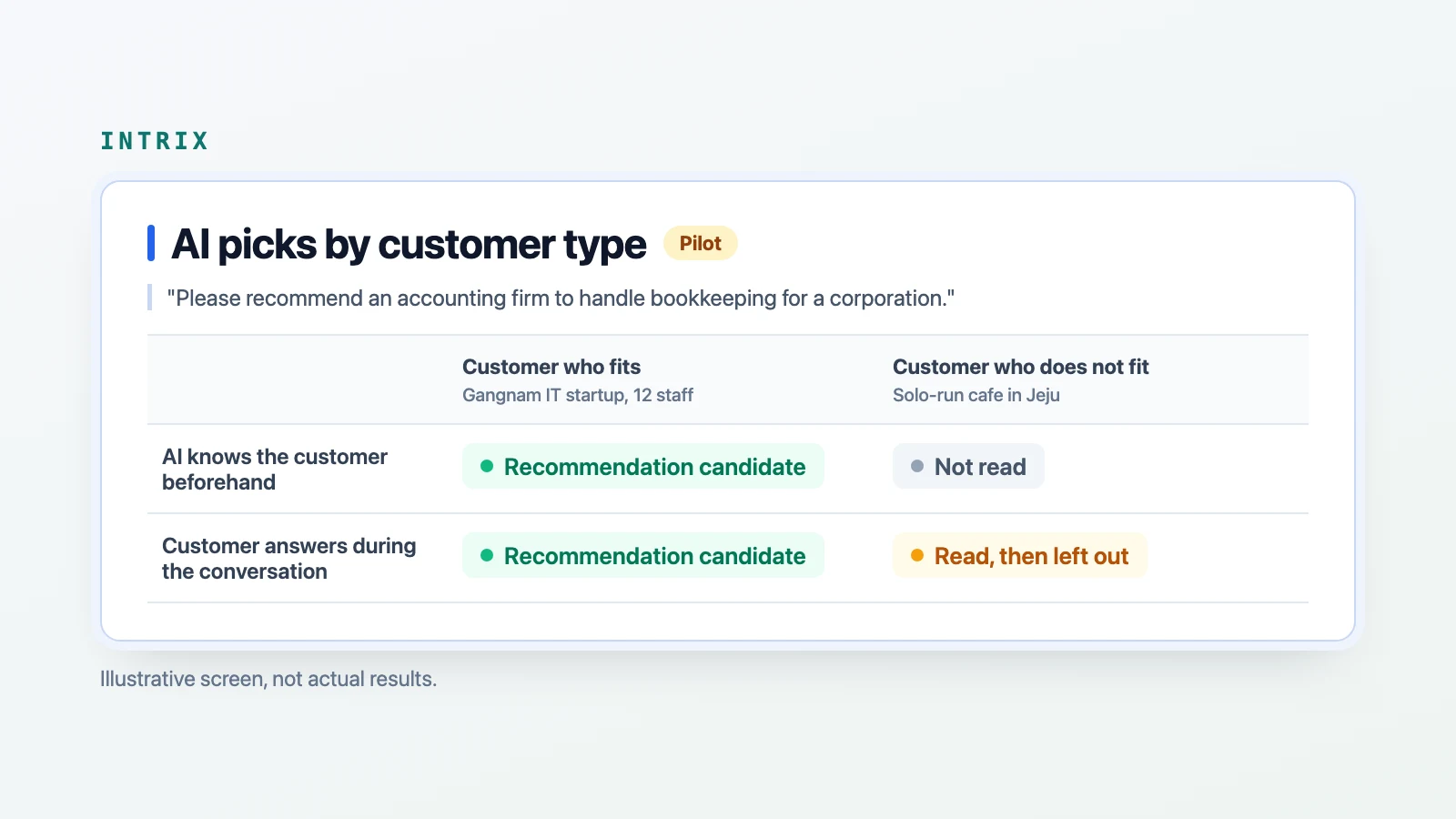
New featurePiloting a check of where AI recommendations change by customer type
Intrix is piloting customer profile checks to compare where sites leave AI recommendations and which sources replace them. Not yet in customer dashboards or reports.
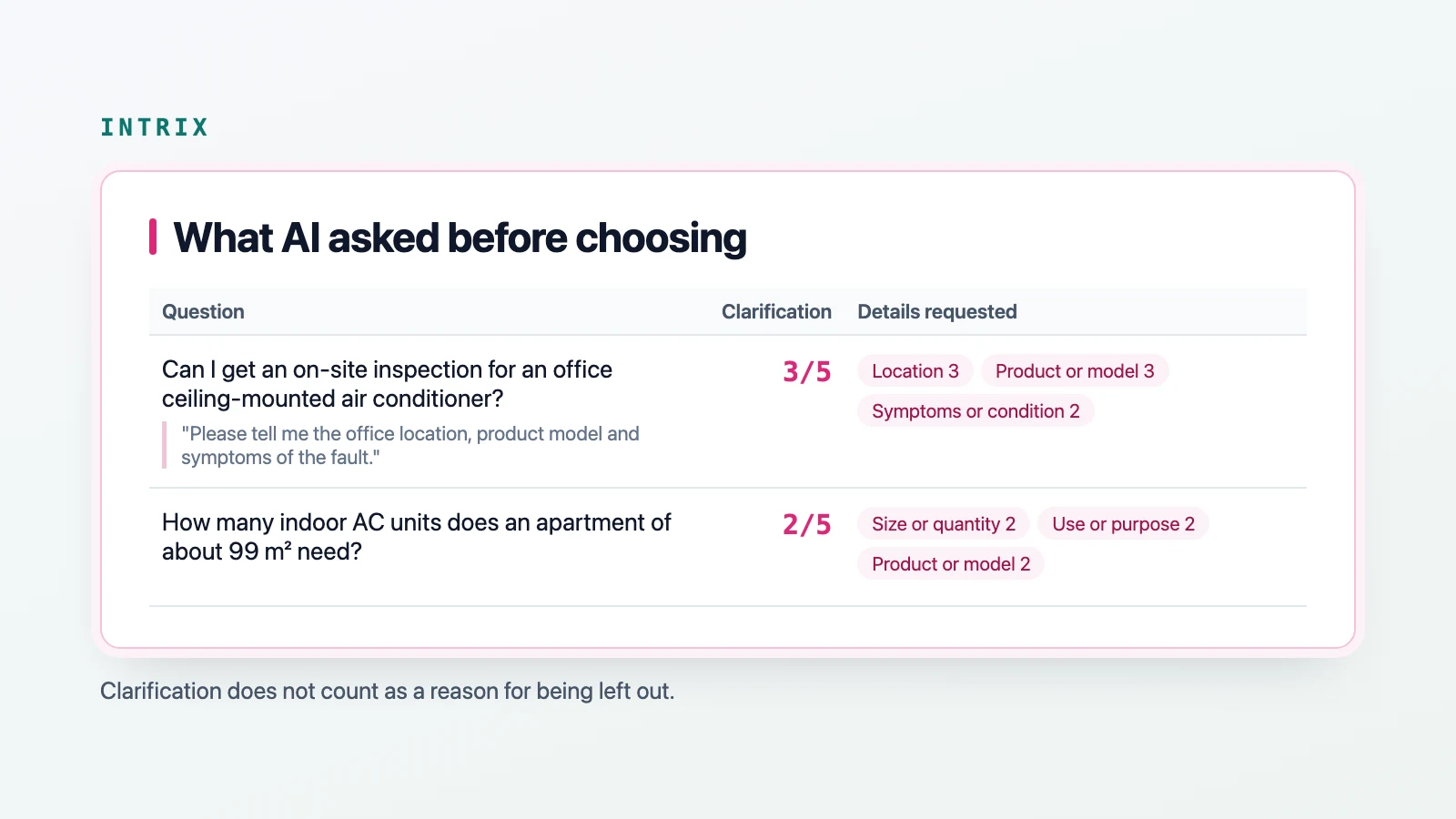
New featureSee when AI asks for details before choosing a company
See answers where AI asks for details before choosing a company. Read the requested conditions and follow them into the customer needs recommendation check.
New feature